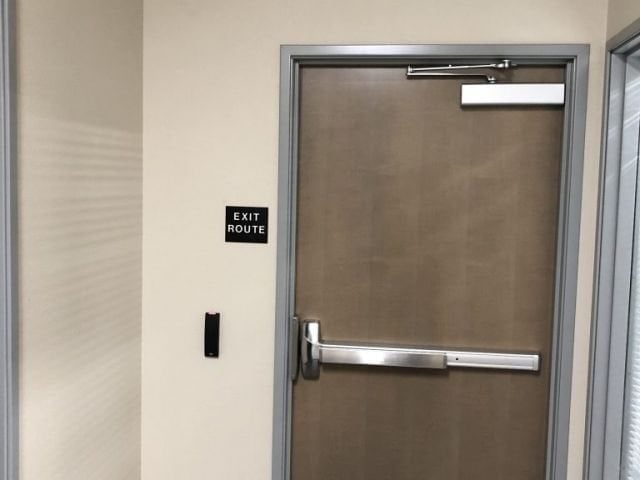
What a closer does
- closes the door at a controlled speed instead of letting it swing or slam
- finishes the close so the latch engages on doors that need to stay shut
- stops the door from being left standing open, which helps keep heated or cooled air inside
- reduces the wear that slamming causes to hinges, frames and latches
Signs a closer needs attention
- the door slams, or closes so slowly that it does not latch
- oil on the closer body or on the floor below it
- a loose, bent or noisy arm
- a door that is hard to open or no longer closes fully
Replacing or servicing a closer
Closers come in different sizes, mounting styles and finishes, so a replacement has to suit the door and how it is used. The manufacturer and model marked on the closer help, and our hardware identification and enquiry guide explains what to look for. Please do not adjust or remove a closer yourself: it is under spring tension. On a fire door, the closer is part of the door assembly, so tell us when a fire door is involved.
See Door Hardware to send a hardware enquiry by email.
For work on site in the Sacramento region, generally within about 80 miles, use Request Service. Sending a request does not book an appointment.